



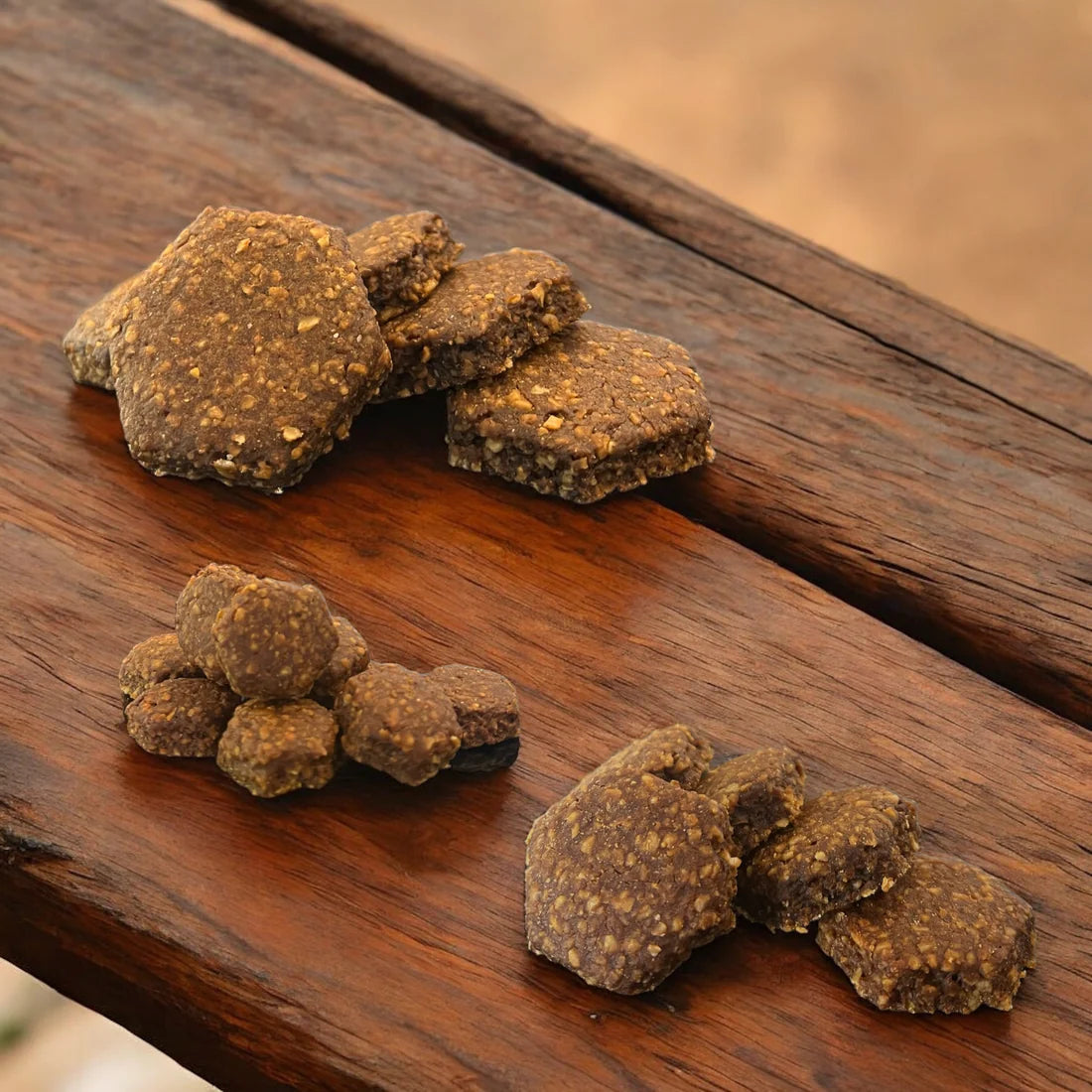
Health Horse CHILL PILLS Nutri-Bites
- Regular price
-
$39.99 - Regular price
-
- Sale price
-
$39.99
Couldn't load pickup availability
Estimated Shipping Widget will be displayed here!
Compare cost per day: See how this stacks up against every calmer we stock →
B group Vitamins are an essential element for relaxing muscles and nervous tensions, while restoring Magnesium and Calcium to optimum levels helps your horse to relax and feel calm again.
Keeping these Nutri-Bites with you to top up at those important times such as in the warm up arena, makes for the most convenient calming support- avoiding the need or embarrassment of having to syringe your horse with calming formulas next to the ring or having to go back to the truck or float!
Magnesium is an essential macromineral for all animals. The majority of magnesium in the horse’s body is found in bone and muscle. Magnesium is used in calming supplements to reduce excitability, anxiety, and reactivity. In human studies, it has been shown to influence nerve transmission and support an anxiolytic (anti-anxiety) effect.
2) Tryptophan
Tryptophan is an amino acid precursor to the neurotransmitter and hormone serotonin. Serotonin is the brain chemical that produces feelings of happiness and contentment. Tryptophan is said to produce a calming effect by increasing serotonin levels in the brain. Serotonin is an inhibitory neurotransmitter that is involved in regulating appetite, sleep, mood balance, emotions, anxiety, pain sensitivity and more.
3) Thiamine
Thiamine is a B-vitamin (Vitamin B1) that is required by the horse for a variety of metabolic functions, including carbohydrate metabolism. B vitamins play a role in nervous system function and thiamine supplementation is purported to have a calming effect. Thiamine and B-complex vitamin supplementation are generally believed to be beneficial in horses under stress.
4) Calcium
Calcium is used to calm equines to help aid focus and concentration without sedation, while supporting normal neurotransmission.
AMOUNT: 5 Nutri-Bites daily (per average 500kg body weight)
1kg bag: Average 6/7 weeks per horse
Shipping Info
Shipping & Pickup Information
Flat Rate Shipping via Post Haste (Excludes Feed):
- North Island: $10 (1-2 working days)
- South Island: $20 (2-3 working days)
- Rural Surcharge: +$6 (extra time may apply)
Feed Shipping per bag via Post Haste:
- Central North Island: $14 Per Bag
- Upper North Island: $18 Per Bag
- Lower North Island: $28 Per Bag
- South Island: $55 Per Bag
- Rural Surcharge: +$6 (extra time may apply)
Orders placed before 1 PM are usually shipped the same day.
Pick-up Info
Click & Collect – Tauranga Store Only
Free 24/7 pickup via our secure after-hours collection box. Please email us if you would like to collect after hours and we will send you the instructions.
Try Before You Buy – No Obligation
We carry limited stock in-store, so we encourage customers to place orders online to secure the items they’d like to try. Simply select “Pay on Pickup” at checkout, and we’ll bring the product into store for you (excludes saddles).
Once your order arrives, you’re welcome to try it on or inspect it in person. There’s absolutely no obligation to purchase—if it’s not quite right, you can leave it with us, no problem at all. If you do decide to keep it, payment can be completed in store at the time of pickup.
Returns & Exchanges
No problem! We offer 30-day returns and exchanges on items in new, resalable condition with original packaging. Returns are issued as store credit, which never expires. See our full policy.
FAQ
All your questions, answered.

The thermoneutral zone is the temperature range where the body can maintain its core temperature with little to no extra energy expenditure. For humans, this range is quite narrow at 21–28 °C, but for horses it’s much broader at 5–25 °C.
This difference means we should avoid rugging horses based on how cold we feel. Over-rugging can lead to serious health issues, including metabolic problems and thermoregulatory dysfunction.
Tips for Choosing a Winter Rug Weight
-
Clipped horses may need a heavier gram fill to stay comfortable.
-
Remember: horses warm themselves more easily than they cool down under a rug. If unsure, choose a lighter rug.
-
Check your horse regularly to make sure they are neither too hot nor too cold.
-
Consider your horse’s age and natural ability to stay warm.
-
As a general guide, rugging is usually appropriate when temperatures drop below 5–10 °C, but always adjust for your horse’s individual needs.
-
Always ensure rugs are waterproof. A wet rug is worse than no rug at all.
This is an indicative guide only. Always take into account factors such as wind chill, your horse’s age, weight, and condition.

